
Right now, your program works because you're in it. That's the ceiling — and you can feel it.
I help expert founders turn live-dependent programs into designed client experiences that deliver results without constant hand-holding.
| For mature, proven programs that already get results.
THE HERO TRAP
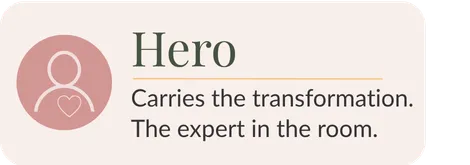
You've become the hero of every client's transformation.
The one who explains the nuance, holds the energy, catches what's about to slip.
It works.
It also can't grow, and it's wearing you down.
→
I've watched as program owners tried to step back.
Inevitably, something always breaks.
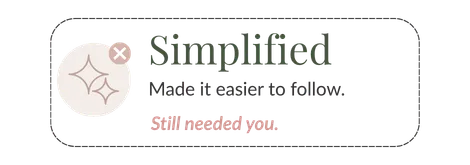
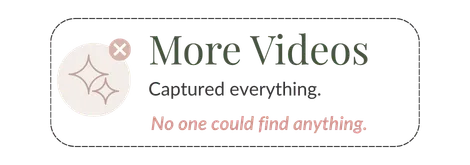
And every time they added another call or another workaround,
they put themselves right back in the center.
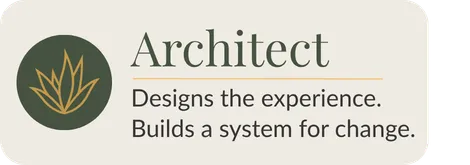
The architect doesn't disappear from the transformation.
They design it with intention, and it carries the client on its own.
That's a more powerful place to stand than the hero ever was.
Does this sound like you?
Your method works because you’re there to explain.
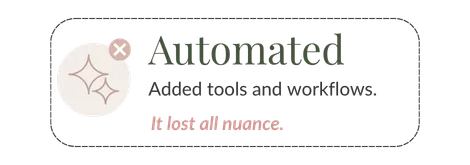
You've tried to automate, then automation flattened the nuance that made it work.
You want confident clients who reach outcomes without hand-holding.
You want to scale without losing what makes the work effective.
You’re ready for more, yet you're already at capacity.
You're looking for a structure strong enough to hold your genius.
If you're nodding, you don't have a content problem. You have a structure problem. And it's solvable.
What this is
I'm an instructional designer. My work is engineering how people move from where they are to real, measurable outcomes. We use the discipline behind growth and learning that actually changes behavior, rather than just delivering information. It's the reason most "turn your program into a course" attempts quietly fail, and the reason this won't.
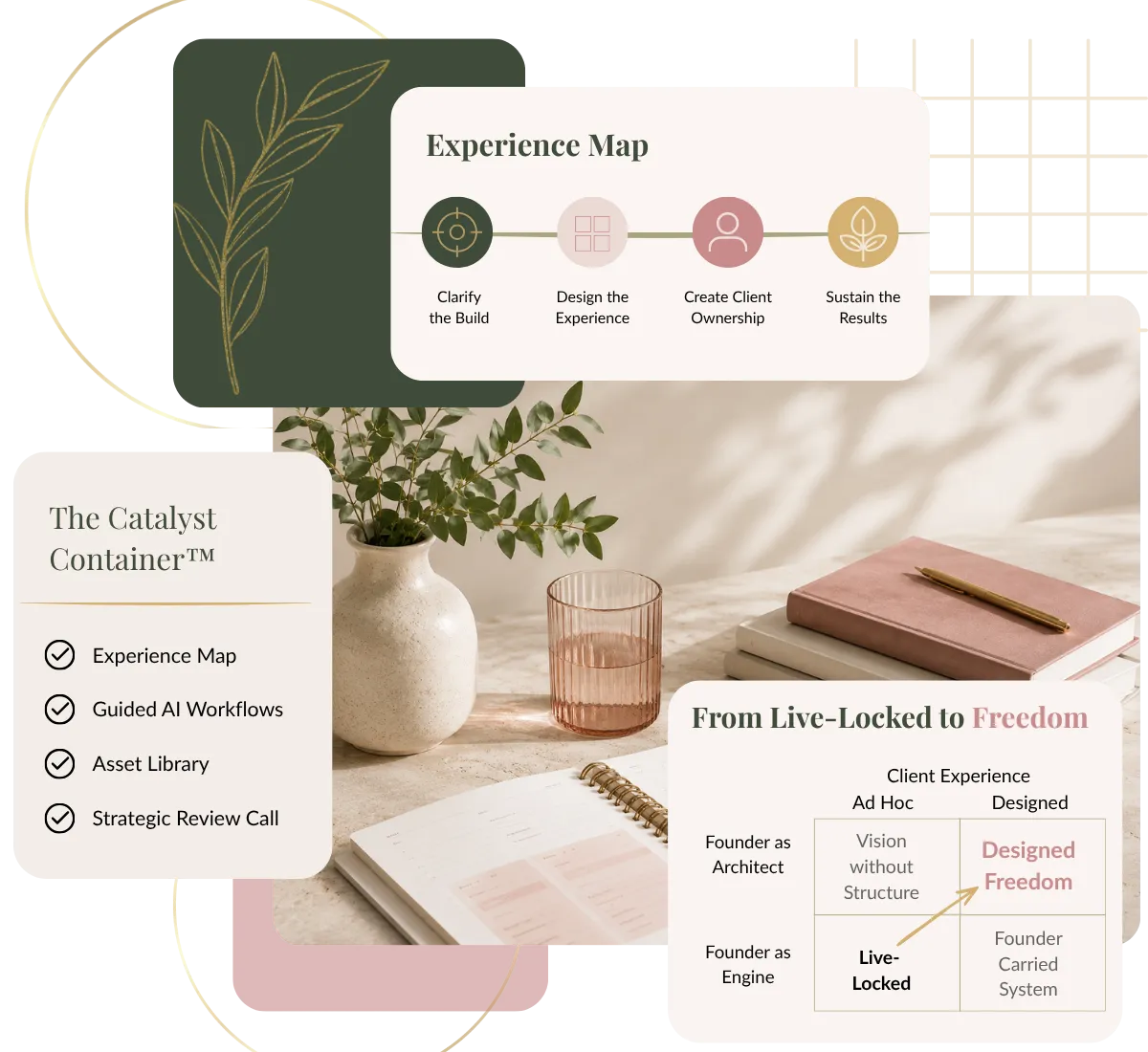
Together we use that foundation to rebuild your program into a Catalyst Container™ which is an environment your clients move through and succeed inside without you driving every step.
You do the building. That's the point: building it is how you become the architect. And you're not alone. You build from a planned design with all the steps and direction clearly defined:
A complete Experience Map of your client's path, from first step to final outcome
Custom GPT workflows that pull your expertise out of your head and onto the page in hours, not weeks
Guidance and templates showing you (or your team) how to build each asset to a quality bar that holds
One working review call with me to pressure-test your plan before you build a thing
A process for handing off delivery, without unintentionally rebuilding the dependence we just removed
By the end, your program runs on its own because it was designed to. You step back, and the results keep happening.
You've stopped performing it and started owning it.
Build Once.
Lead Always.
Scale your impact without scaling your exhaustion
A program that only runs at full strength when you're present isn't a business asset yet. It's a performance. Powerful, but fragile, and capped by your calendar.
The work we do together turns what only you can do into what only your business can deliver.
We won't dilute your depth or replace your voice with generic content. Nope. Instead, what we do is to engineer your judgment into the experience itself, so it shows up for every client whether or not you're in the room.

HOW WE BUILD A CATALYST CONTAINER™
3 PHASES TO BUILD A PREMIUM PROGRAM
The Spark → Structure → Sustain Framework
Three phases move you from performing transformation to engineering it.
A clean, high-velocity sequence — precise, fast, and built with intention.
PHASE I - SPARK
Design the Architecture
Before we build anything, we clarify everything. This phase extracts the logic behind your brilliance and turns it into a build-ready blueprint.
In this phase you will:
Generate three Learning Personas — your ideal client, your ceiling case, and your floor case — so the design holds up for the people who don't move the way you'd hope
Build your Experience Map: the transformation path from entry to outcome, designed for action, not consumption
Define success conditions your clients can evaluate without you
Identify the barriers that derail momentum before they appear
Validate it all in an Architecture Review Call with me (included — and optional if you'd rather review async)
Outcome:
A finalized Experience Map and a validated build plan you can act on immediately.
PHASE II - STRUCTURE
Build the Environment
This is where architecture becomes asset. You build the supports and systems that carry clients forward without constant hand-holding.
In this phase you will:
Set up project visibility — a folder, a tracking sheet, and a simple development rhythm (solo or with a team)
Build action-focused program assets using mini-courses that show you how to build each one to quality. Build only what your Experience Map requires.
Embed your feedback and judgment directly into the experience, so guidance is built in rather than delivered live
Build the delivery environment and simulate it end-to-end — walking the path as each of your three personas before a single client arrives
Outcome:
A complete, tested transformation environment that runs without you as the engine.
PHASE III - SUSTAIN
Identify as Architect
The hardest shift isn't technical — it's identity. Stepping into the architect role changes how you see your clients and yourself.
In this phase you will:
Find the moments where you instinctively re-center yourself as the hero — and choose the architect's move instead
Align your decisions with the standards you've built, rather than reflexive intervention
Design milestone reinforcement, self-accountability, and feedback loops so progress continues — and improves — long after delivery ends
Strengthen your trust in the environment you've built, and in your clients' ability to succeed inside it
Outcome:
Your program works because it’s designed to and not because you’re carrying it.
What This Looks Like in Practice
Inside the Catalyst Container™, you're never waiting on me to move forward.
You move through a structured environment built to keep momentum high and decisions clear.
Guided GPT Workflows
Short, targeted GPT sequences that help you generate key build inputs quickly and reduce decision fatigue.
An Asset Library
Mini-lessons and templates that show you and your team how to build action-focused assets—so the work can be shared without losing quality.
Sustain Support
A guided process for shifting from performing transformation to designing for ownership — so you don't rebuild dependence inside the new structure.
A Strategic Review Call
A working session between Phase I and Phase II to validate your Experience Map, confirm your build plan, and remove friction before development begins.
You don’t need more content.
You need the right structure.
Build Once. Lead Always.
COMPANY
LEGAL
FOLLOW US


